Have your own Alpaca fleece and what to turn it into socks? Let’s see what that process looks like.
What to Do With Your Alpaca Fiber: Turning Your Clip Into Socks
Shearing day is done, and the bags are stacking up in the barn. If you’re wondering what to do with all that fiber — and how alpaca fiber processing actually gets you from raw fleece to something you can sell — socks are one of the best answers we know. Here’s how your clip becomes a finished pair, how much yarn it takes, and what to expect along the way.
Key Takeaways
- Your spinner’s minimum usually sets the size of your project. – Spinners set their own minimum batches, often far more yarn than one 60-pair sock run needs, so ask before you plan.
- A spinner and a sock mill split the work. – The spinner washes your fleece and spins it onto cones; the mill knits, finishes, and ships the socks.
- Plan for two lead times. – Your spinner sets its own schedule, and knitting takes about 3 weeks once the cones arrive.
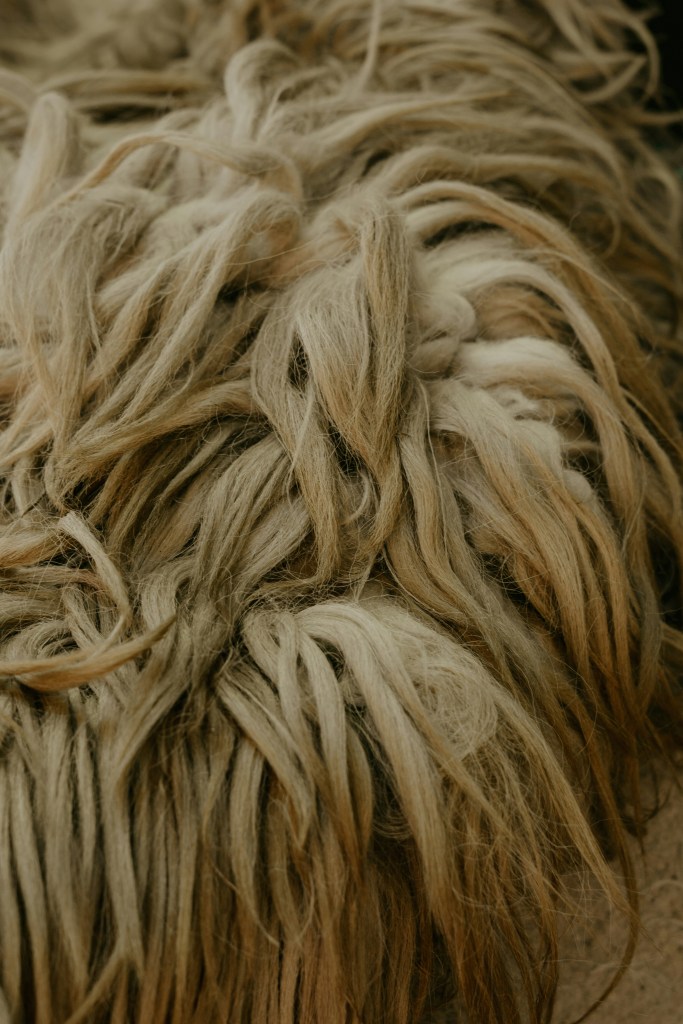
Why Socks Are a Smart Use of Your Alpaca Fiber
So why socks, and not scarves or blankets? A few reasons make them a natural fit for a farm’s clip:
- Everybody wears them – A scarf is a gift for some people. Socks are a gift for anyone, in any season, and they wear out — which means customers come back.
- Your yarn goes a long way – At about 8–10 pairs per pound of spun yarn, a batch from the spinner turns into a lot of socks to sell.
- They’re an easy farm-store sale – Socks are small, giftable, and easy to understand. Nobody needs a size chart for a crew sock.
- They tell your farm’s story – Socks made from the herd your visitors just met are a souvenir no gift shop can copy.
The honest tradeoffs: your socks won’t be 100% your fiber, because every sock needs nylon and elastic to hold its shape (more on that below). And this is a production project, not a craft one. Our runs start at 60 pairs, but the bigger threshold is usually the spinner’s minimum batch, which can be more fiber than a small farm shears in a year. If that’s you, ask your spinner whether you can combine your clip with other farms’ fiber.
How Alpaca Fiber Becomes Socks, Step by Step
From fleece to finished pair, here’s the whole journey:
- Skirt and sort your fleece – Pull out guard hair, vegetable matter, and short or stained edges, and keep similar fleeces together. (Not sure what skirting involves? Colorado State’s alpaca fiber glossary defines the terms.) Ask your spinner how they want it prepared.
- Send it to a spinner – The spinner washes the fleece, blends it, and spins it into sock-weight yarn on cones.
- The spinner ships the cones to us – Direct from the spinner is fine. Already have spun yarn? You can skip straight to this step.
- We knit your socks – In North Carolina, adding elastic and a thin nylon plating yarn alongside your alpaca to give the sock its shape and hold. Any standard style works, from ankle to crew to compression. (Curious about the machine side? Here’s how socks are made.)
- Finish, package, and ship – We finish the socks, add private label packaging if you want it, and ship to your store, warehouse, or home.
How Much Alpaca Fiber Do You Need for Socks?
Two numbers decide this: what your spinner needs, and what your socks need.
Start with the spinner. Spinners set their own minimum batch, and for sock yarn on cones it’s often far more than one sock run uses. Ask for that minimum first — it usually decides how much fiber you need to send.
Then the socks. Plan on about 8–10 pairs per pound of spun yarn — not raw fleece. Here’s what a batch of yarn turns into:
| Spun yarn | Pairs of socks |
|---|---|
| 6–8 lbs | about 60 (our minimum run) |
| 50 lbs | about 400–500 |
| 100 lbs | about 800–1,000 |
| 200 lbs | about 1,600–2,000 |
A full batch from the spinner may be more socks than you’ll sell in a season, so plan what the whole batch will become before you ship your fleece.
Your raw fleece needs to weigh more than that. Washing removes dirt and debris, and spinning loses short fibers, so some weight disappears between the bag and the cone. How much depends on your fleece and your spinner’s process — ask them for the figure before you ship.
How to Choose an Alpaca Fiber Mill (Spinner)
Not every spinner is set up for sock yarn. Before you send fleece, ask:
- What’s your minimum batch? – This is the number that sizes your whole project, so ask it first.
- Can you spin sock-weight yarn on cones? – Sock knitting machines feed from cones, not hand-knitting skeins.
- Can you blend with nylon? – We prefer an alpaca/nylon blend. We also knit alpaca blended with merino or acrylic — if you’re weighing merino, our alpaca vs. merino wool socks comparison covers the tradeoffs.
- How much fleece do I need for the yarn weight I want? – They’ll know their own processing loss.
- What’s your current lead time? – Busy spinners can have long queues.
- Can you ship cones directly to my sock mill? – It saves you a trip.
Keep the blend alpaca-forward
Nylon is what keeps an alpaca sock from bagging at the heel and slouching at the cuff — no sock yarn holds its shape on its own, and alpaca leans on that help more than wool does. (Here’s why alpaca socks are blended in more detail.)
But the plating yarns we add during knitting lower the alpaca share of the finished sock. Our own 70/30 alpaca/nylon yarn, for example, knits out to roughly 55–60% alpaca. Our standard is at least 50% alpaca in the finished sock — the number your customers will see on the fiber-content tag. Below that, the synthetic is doing most of the work, and your customers are paying alpaca prices for it. So talk with us before your spinner blends the yarn, and we’ll make sure your socks clear that line.
There’s a business reason, too. When a sock bags out, customers don’t blame the yarn — they blame the name on the label. A blend that holds its shape protects your farm’s name.
Then choose a sock mill
Once your yarn plan is set, look for a mill that will:
- Knit customer-supplied yarn – Not every mill will.
- Run a minimum that fits a farm – Ours starts at 60 pairs.
- Turn it around in weeks, not months – So your socks hit the shelf in season.
- Handle the finishing – Packaging and shipping, so you’re not bagging socks at the kitchen table.
We knit farm fiber in North Carolina, and you’ll be talking directly to the people running your order. You can see the details on our custom alpaca socks page.
What to Expect on Timing
Your project runs on two clocks. The first is your spinner’s — it varies widely from spinner to spinner, so ask early. The second is ours: about 3 weeks of knitting once your cones arrive, then shipping.
If you want socks on the shelf for winter shoppers or a fall fiber festival, work backward from that date and get your fleece to the spinner well ahead of it.
Blend Matters for Both: How Much Fiber Should a Sock Have?
So how do you know you’re getting real alpaca or real merino? Look at the fiber-content tag. Our standard is simple: a sock should be at least 50% alpaca or merino in the finished sock.
Below 50%, most of the sock’s character comes from the synthetic, not the premium fiber — and you’re paying alpaca or merino prices for it. Nylon and elastic should complement the fiber, not outweigh it. And if animal welfare matters to you, look for the Responsible Wool Standard (RWS) or the Responsible Alpaca Standard (RAS), which audit the farms and every company that handles the fiber after them.
One more thing worth knowing: the tag shows the blend of the finished sock, not the yarn. A manufacturer may quote you the yarn blend, and the finished sock always comes in lower. Our alpaca yarn, for example, is spun in Peru from 70% alpaca and 30% nylon. Once we add the elastic and thin nylon plating yarns that give a sock its shape, the finished sock lands at roughly 55–60% alpaca. For a deeper look at blends, see our guide on whether alpaca socks are worth it [LINK: pillar URL].
Selling Your Alpaca Socks
The socks are made. Now where do they go?
- Your farm store – The easiest sale you’ll make. Visitors who just met your herd want to take a piece of it home.
- Fiber festivals and markets – These crowds already know why alpaca is special, so you won’t have to explain it.
- Online – Your website or an online shop lets past visitors reorder after they’ve gone home.
Wherever you sell, tell the story. Name the animals on a hang tag, show shearing day on social media, and let the socks carry your farm’s name.
Frequently Asked Questions
How much alpaca fiber does it take to make a pair of socks?
About 1.5–2 ounces of spun yarn per pair, or roughly 8–10 pairs per pound. You’ll need more raw fleece than that, since some weight is lost in washing and spinning. Your spinner can tell you how much.
Can I get socks made from my own alpacas?
Yes. Send your fleece to a spinner to be spun into sock-weight yarn on cones, then have the cones shipped to a sock mill like ours. Ask the spinner about their minimum batch first — it’s usually the bigger hurdle. Our runs start at 60 pairs, and knitting takes about 3 weeks once the yarn arrives.
Why do alpaca socks need nylon?
No sock yarn holds its shape on its own. Alpaca has relatively little crimp — the natural wave that gives fiber its spring — so it needs nylon and elastic to keep the heel and cuff from bagging out. The nylon also adds strength where socks wear hardest.
What grade of alpaca fiber is used for socks?
There’s no single required grade. The U.S. Alpaca Fiber Standard sorts fiber into seven grades by average fiber diameter in microns, from grade 0 (finest) to grade 6. Finer fiber feels softer against the skin — itch comes from fiber diameter, not the animal. Your spinner is the best judge of which of your grades will make good sock yarn.
Final Thoughts
From the barn to the farm-store shelf, socks are one of the most rewarding things your fiber can become — and your customers’ feet will thank your herd. When your yarn is spun (or before, if you want help planning the blend), tell us about your project and we’ll put together a quote.

